
The Complete Itamambuca Beach Guide: What to Do, How to Get There and Where to Stay in Ubatuba
Discover Itamambuca Beach in Ubatuba, Brazil. A complete guide covering surf, trails, restaurants, accommodation and tips for your trip.
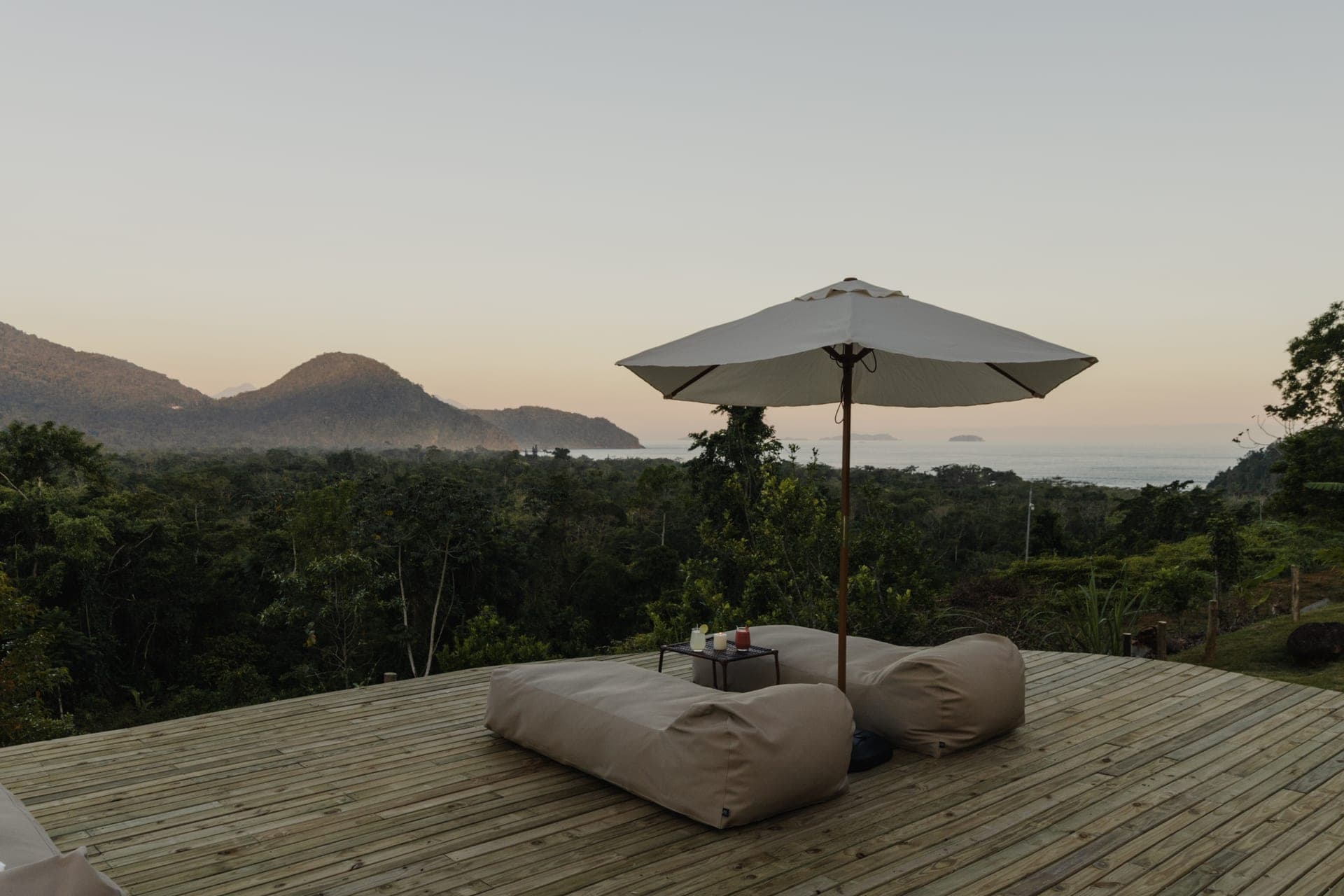
Itamambuca is an open-ocean, Atlantic-Forest beach on the northern coast of São Paulo state, in Ubatuba, about a 3.5-hour drive from the capital — known for year-round surf, a river of natural pools and preserved nature. Momento Itamambuca is a 13-room boutique hotel on the high side of the beach, a 5-minute drive from the sand.
Quick facts: the Itamambuca guide - Where: Itamambuca Beach, Ubatuba (SP), Rio-Santos highway (BR-101) km 37.5. - Getting there: ~230 km from São Paulo (~3.5h) via the Tamoios (SP-099) or Oswaldo Cruz (SP-125) highways. Paved road, no 4x4 needed. - Surf: one of the best beaches in São Paulo state; best swells April to October; summer for learning. - Nature: a river with shallow natural pools (great for kids), Atlantic-Forest trails and neighbouring beaches (Alto, Félix, Brava). - Where to stay: Momento Itamambuca — a 13-room boutique with pool, glass sauna, yoga and breakfast included. - Best time: April-June and October-November (mild weather, quiet); winter for surf.
Why Itamambuca Is One of the Most Special Beaches on the Sao Paulo Coast
There is a moment, right as you arrive at Itamambuca Beach, when you stop and take a deep breath. It is not just the air, heavy with salt and green. It is the feeling of having found a place that still holds something wild on the northern coast of Sao Paulo state. While other beaches in Ubatuba surrendered to unplanned development, Itamambuca kept its essence: a wide strip of pale sand, a river that cuts across the beach forming natural pools, Atlantic Forest descending almost to the waterline, and open ocean that draws surfers from around the world.
Itamambuca is not just another beach. It is a complete ecosystem. The Itamambuca River divides the beach into two stretches and creates calm-water areas ideal for children and anyone who wants to relax without facing Atlantic swells. On the other side, the open sea delivers surf conditions that place this beach among the best in Sao Paulo state. The combination of preserved nature, good infrastructure, and accessible distance from the capital makes Itamambuca a destination that works equally well for a weekend trip or an extended stay.
How to Get to Itamambuca Beach from Sao Paulo
Itamambuca Beach is located in the municipality of Ubatuba, on the northern coast of Sao Paulo state, approximately 230 km from the capital. The drive takes between 3 and 3.5 hours depending on traffic.
The most common route follows the Carvalho Pinto Highway (SP-070) to Taubate, then the Oswaldo Cruz Highway (SP-125) down to Ubatuba. The mountain stretch is winding but beautiful, with natural viewpoints overlooking the Atlantic Forest canopy. Once in Ubatuba, Itamambuca lies to the north at km 37.5 on the BR-101 (Rio-Santos highway) toward Paraty.
- Transport alternatives:
- Direct bus from Sao Paulo to Ubatuba from Tiete Bus Terminal (approximately 4 hours), then taxi or transfer to Itamambuca
- Private transfer from Guarulhos International Airport
- Ride-hailing apps work within Ubatuba, though coverage thins out at more remote beaches
Important tip: during long weekends and summer (December to February), the mountain descent can see severe congestion. Leave Sao Paulo before 6 AM or after 10 PM to avoid the worst of it.
The Beach: Raw Nature and Open Ocean
Itamambuca stretches for about 1,800 meters. The sand is light and coarse, typical of the northern Sao Paulo coast. The landscape is dominated by Atlantic Forest covering the surrounding hills and reaching down to the sand in some sections, creating natural shade.
The Itamambuca River empties into the center of the beach and shifts position throughout the year depending on rainfall and tides. During the drier months, it forms shallow warm-water lagoons that are perfect for children. During the rainy season, the river widens and crossing requires caution.
The ocean is open to the South Atlantic, with no islands or reefs to break incoming swell energy. This means consistent waves for most of the year, which is excellent for surfing but demands respect from swimmers. There are sections with rip currents. Always observe conditions before entering the water and heed warning flags when posted.
The restinga vegetation between sand and forest shelters notable biodiversity. Sightings of toucans, marmosets, and numerous bird species in the coconut palms and riverside forest are common.
Surfing Itamambuca: One of the Best Breaks in Ubatuba
Itamambuca is synonymous with surfing in Ubatuba. The beach has hosted stages of national and international championships, and its beach break is considered one of the most consistent on the northern Sao Paulo coast.
The best conditions arrive with south and southeast swells, offshore winds from the west or northwest, and low to mid tide. In winter (June to August), south swells are more frequent and waves can easily exceed 2 meters. Summer tends to bring smaller surf, but good days still occur, especially in January and February when cold fronts pass through.
For those wanting to learn, surf schools on the beach offer lessons for all levels. Some accommodations in the area, such as Momento Itamambuca, also arrange surf lessons for their guests, making it easy for complete beginners to get started.
- The peaks are distributed along the beach:
- Left corner: longer waves, good for longboarding
- Center of the beach: main peak, stronger and hollower waves
- Right corner (near the river): smaller waves, good for beginners
Trails and Nature Around Itamambuca
What is there to do in Itamambuca beyond the beach and surf? Walk. The area is surrounded by trails that range from easy strolls to more demanding hikes.
The best-known trail connects Itamambuca to Praia Brava. It takes about 20 minutes through the forest, with sections of moderate climbing. Praia Brava is a deserted beach with no infrastructure, surrounded by rocky headlands. The effort is rewarded by isolation and beauty.
- Other options in the area:
- Itamambuca River trail: a walk through the riparian forest following the river, with natural pools for swimming
- Trail to Praia do Felix: accessible by car or on foot, another surf beach with good facilities
- Ubatuba Corcovado Peak: for the more ambitious, a 10 km trail leads to the highest point in the area with 360-degree views of the coastline
- TAMAR Project in Ubatuba: not a trail, but an essential stop for anyone traveling with children, focused on sea turtle conservation
The Atlantic Forest in the Itamambuca region is part of the Serra do Mar State Park, one of the largest protected areas of tropical forest in Brazil. Walking through it is a full sensory experience.
Where to Eat in Itamambuca and Surroundings
The local cuisine reflects the caiçara tradition: fresh seafood, cassava, banana, grilled fish, and seasonings from local farms.
On Itamambuca Beach itself, there are kiosks and beachfront restaurants serving snacks and full meals. Grilled fish with fried banana and banana farofa is a classic dish that should not be missed.
For a more refined experience, the restaurant at Momento Itamambuca works with local and seasonal ingredients, offering cuisine that highlights regional produce with contemporary technique. It is a solid option for a special dinner without leaving the beach.
- In central Ubatuba (about 20 minutes by car), there are more choices:
- Seafood restaurants at the fishing port
- Artisanal ice cream shops
- Open-air markets with local produce (Wednesdays and Saturdays)
- Bakeries and cafes for breakfast
Where to Stay: Accommodation in Itamambuca
Itamambuca offers accommodation for different profiles and budgets. There are campsites for those who prefer direct contact with nature, family-run guesthouses at accessible prices, and more upscale options.
Among the standout choices is Momento Itamambuca, a boutique wellness hotel with 13 rooms set on the hillside with ocean views — the beach is a few minutes away by car or bike. The hotel distinguishes itself with a glass sauna overlooking the Atlantic Forest, a restaurant serving local cuisine, and a design that integrates with its natural surroundings. It is the kind of place that matches the rhythm of Itamambuca: calm, connected to the environment, and without excess.
- Tips for choosing accommodation:
- Book well in advance for holidays and peak season (December to February)
- If you plan to surf, prioritize stays on the beach itself to catch the best morning waves
- Check whether the accommodation has parking, as a car is nearly essential in the area
- Many guesthouses do not accept credit cards, so confirm before booking
Best Time to Visit Itamambuca
Ubatuba has a humid tropical climate with rain distributed throughout the year. There is no bad time to visit, but each season offers a different experience.
Summer (December to March): temperatures between 25 and 35 degrees Celsius, calmer seas on average, frequent late-afternoon rain showers. Peak season with crowded beaches on holidays.
Autumn (April to June): mild temperatures, less rain, ocean starting to receive south swells. Excellent time to visit. Fewer people, lower prices.
Winter (July to September): temperatures between 15 and 25 degrees Celsius, larger and more frequent waves, sunny days between cold fronts. Best season for surfing.
Spring (October to November): transition period with warm days and scattered showers. Variable sea conditions. Good season for hiking.
The recommendation for those seeking a balance of weather, price, and tranquility: April, May, June, or October and November.
Practical Tips for Visiting Itamambuca
- Bring insect repellent. The proximity to forest and river means mosquitoes, especially at dusk.
- Use reef-safe sunscreen. The beach is part of a conservation area and protecting the marine ecosystem matters.
- Carry cash. Not all establishments accept cards, especially the beach kiosks.
- Respect nature. Do not leave trash on the beach, do not feed wildlife, do not remove plants.
- Be careful around the river. After heavy rains, water volume increases and currents can be dangerous.
- Cell signal is limited in some areas. Take the opportunity to disconnect.
- For grocery shopping, central Ubatuba has full supermarkets. Itamambuca has only small convenience stores.
Itamambuca is not about noise and nightlife. It is about finding a slower rhythm where the day is marked by tides, sunlight, and the sound of the sea. Anyone looking for that kind of experience will find one of the finest destinations on the Brazilian coast right here.